
Red Butterfly Milkweed
Asclepias curassavica 'Red Butterfly'

Height: 3 feet
Spread: 12 inches
Sunlight:


Hardiness Zone: (annual)
Other Names: Blood-flower, Indian Root, Butterfly Weed
Description:
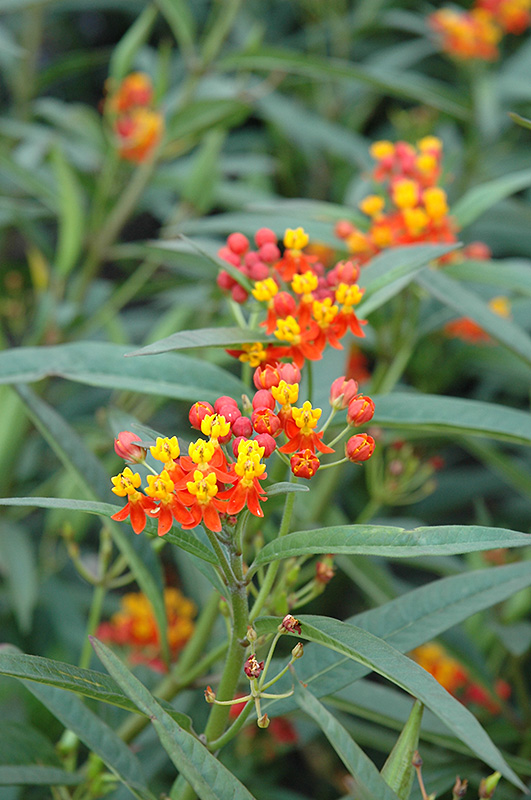
Fabulous plant for attracting butterflies and hummingbirds; unusual and showy bicolored five-petaled flowers are bright gold with recurved scarlet-orange petals; adapts well to most soil types
Ornamental Features
Red Butterfly Milkweed features unusual scarlet flat-top recurved flowers with gold eyes at the ends of the stems from mid summer to late fall. The flowers are excellent for cutting. Its narrow leaves remain forest green in color throughout the year.
Landscape Attributes
Red Butterfly Milkweed is an herbaceous annual with an upright spreading habit of growth. Its medium texture blends into the garden, but can always be balanced by a couple of finer or coarser plants for an effective composition.
This is a relatively low maintenance plant, and is best cleaned up in early spring before it resumes active growth for the season. It is a good choice for attracting butterflies and hummingbirds to your yard, but is not particularly attractive to deer who tend to leave it alone in favor of tastier treats. It has no significant negative characteristics.
Red Butterfly Milkweed is recommended for the following landscape applications;
- Mass Planting
- General Garden Use
- Naturalizing And Woodland Gardens
Planting & Growing
Red Butterfly Milkweed will grow to be about 3 feet tall at maturity, with a spread of 12 inches. It tends to be leggy, with a typical clearance of 1 foot from the ground, and should be underplanted with lower-growing perennials. Although it's not a true annual, this plant can be expected to behave as an annual in our climate if left outdoors over the winter, usually needing replacement the following year. As such, gardeners should take into consideration that it will perform differently than it would in its native habitat.
This plant does best in full sun to partial shade. It is very adaptable to both dry and moist growing conditions, but will not tolerate any standing water. It is not particular as to soil type or pH. It is somewhat tolerant of urban pollution. This is a selection of a native North American species. It can be propagated by division; however, as a cultivated variety, be aware that it may be subject to certain restrictions or prohibitions on propagation.