
Otto Luyken Dwarf Cherry Laurel
Prunus laurocerasus 'Otto Luyken'

Height: 4 feet
Spread: 7 feet
Sunlight:


Hardiness Zone: 5b
Other Names: English Laurel, Common Laurel
Description:
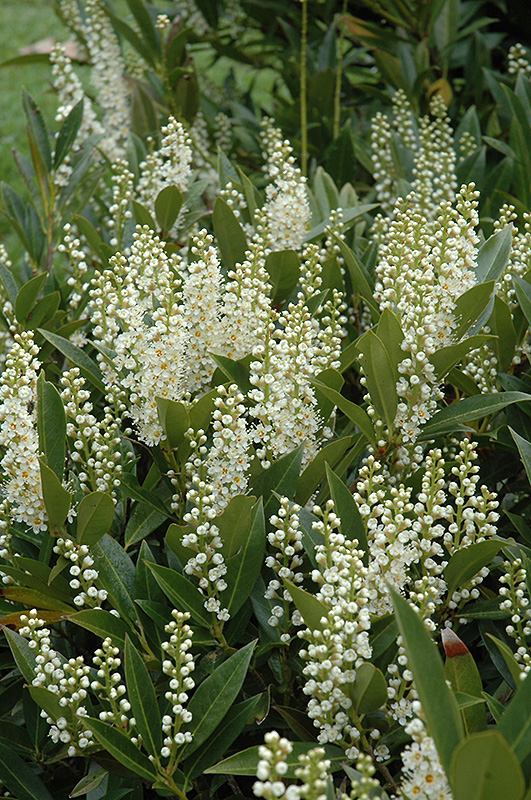
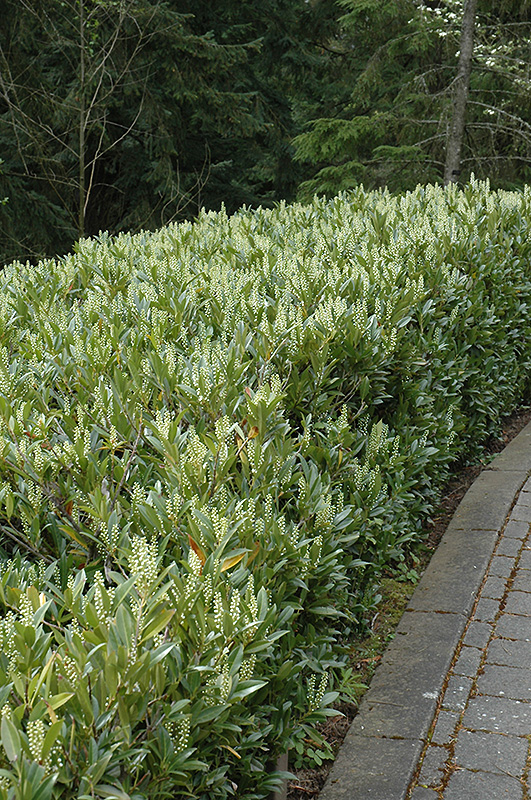
A more compact form of cherry laurel; produces showy, fragrant, erect white spike flowers, freely flowering, black fruit and glossy dark-green leaves; makes a stunning hedge or accent plant, takes pruning very well
Ornamental Features
Otto Luyken Dwarf Cherry Laurel features showy racemes of fragrant white flowers rising above the foliage in mid spring. It has attractive dark green evergreen foliage. The glossy pointy leaves are highly ornamental and remain dark green throughout the winter. The fruits are showy black drupes displayed in mid summer.
Landscape Attributes
Otto Luyken Dwarf Cherry Laurel is a dense multi-stemmed evergreen shrub with a more or less rounded form. Its average texture blends into the landscape, but can be balanced by one or two finer or coarser trees or shrubs for an effective composition.
This is a relatively low maintenance shrub, and should only be pruned after flowering to avoid removing any of the current season's flowers. It is a good choice for attracting birds to your yard. It has no significant negative characteristics.
Otto Luyken Dwarf Cherry Laurel is recommended for the following landscape applications;
- Accent
- Mass Planting
- Hedges/Screening
- General Garden Use
Planting & Growing
Otto Luyken Dwarf Cherry Laurel will grow to be about 4 feet tall at maturity, with a spread of 7 feet. It tends to fill out right to the ground and therefore doesn't necessarily require facer plants in front. It grows at a medium rate, and under ideal conditions can be expected to live for 50 years or more.
This shrub does best in full sun to partial shade. It does best in average to evenly moist conditions, but will not tolerate standing water. It is not particular as to soil pH, but grows best in rich soils, and is able to handle environmental salt. It is highly tolerant of urban pollution and will even thrive in inner city environments. This is a selected variety of a species not originally from North America.


